
Beyond The EV: How Battery, Software And Autonomous Technologies Are Transforming The Travel Industry
25 Jun 2026
Key takeaway:
The technologies that powered the rise of electric vehicles are beginning to find applications beyond transportation. One industry Empyrean Sky Partners is watching closely is the caravan sector, where advances in batteries, sensors and intelligent controls are creating a new generation of connected, off-grid travel experiences.
Newcomers are leading innovation in smart caravans and electric RVs
"Rather than asking how to build a better traditional caravan, we are asking how modern technology can solve long-standing consumer pain points around towing, energy management and ease of use."
~ Rayin Yin, Global Brand and PR Director, Skydream.
The caravan market has typically focused on innovation in hardware, interior materials, and size. With developments in EV technology creating 'smarter' capabilities for caravans, the industry is preparing for a shake-up. Traditional RV leaders such as Winnebago, Airstream and THOR Industries are beginning to embrace connected technologies. However, some of the most interesting innovation is coming from newcomers to the industry.

EV Technology is entering the Caravan market.
Companies like Skydream, Pebble and Lightship are approaching caravans differently, taking a technology-first approach to caravan design that includes features such as Skydream's automatic parking function and tow assistance. These features rely on advanced sensors, cameras, and energy optimisation, technologies that have been central to electric vehicle developments. EV manufacturers spent a decade solving these problems at scale. Companies like Skydream can now access components and software that would have been prohibitively expensive to develop independently.
Caravans are an early beneficiary of EV technology
As EV technology matures, manufacturers are looking beyond passenger vehicles for growth. Some have moved into humanoid robotics, leveraging expertise in batteries, control systems, and manufacturing. Others are finding opportunities in industries facing similar challenges.
When one technology becomes efficient enough or affordable enough, it creates opportunities in other categories. Batteries became cheaper because of electric vehicles. Autonomous parking became possible because of advances in vehicle sensors. We've written about this previously in the smart wearables and outdoor maintenance categories.
Why caravans are well suited to smart upgrades
Caravans are particularly well suited to these innovations. Better batteries improve off-grid capability and reduce reliance on generators, while cameras and sensors help make towing and parking less daunting for travellers. Caravans are also becoming a 'smart home away from home.' Owners can monitor battery levels, adjust lighting, manage climate control and track energy usage from a smartphone. The goal is not simply to make caravans more technologically advanced. It's to make them easier and more enjoyable to live in.
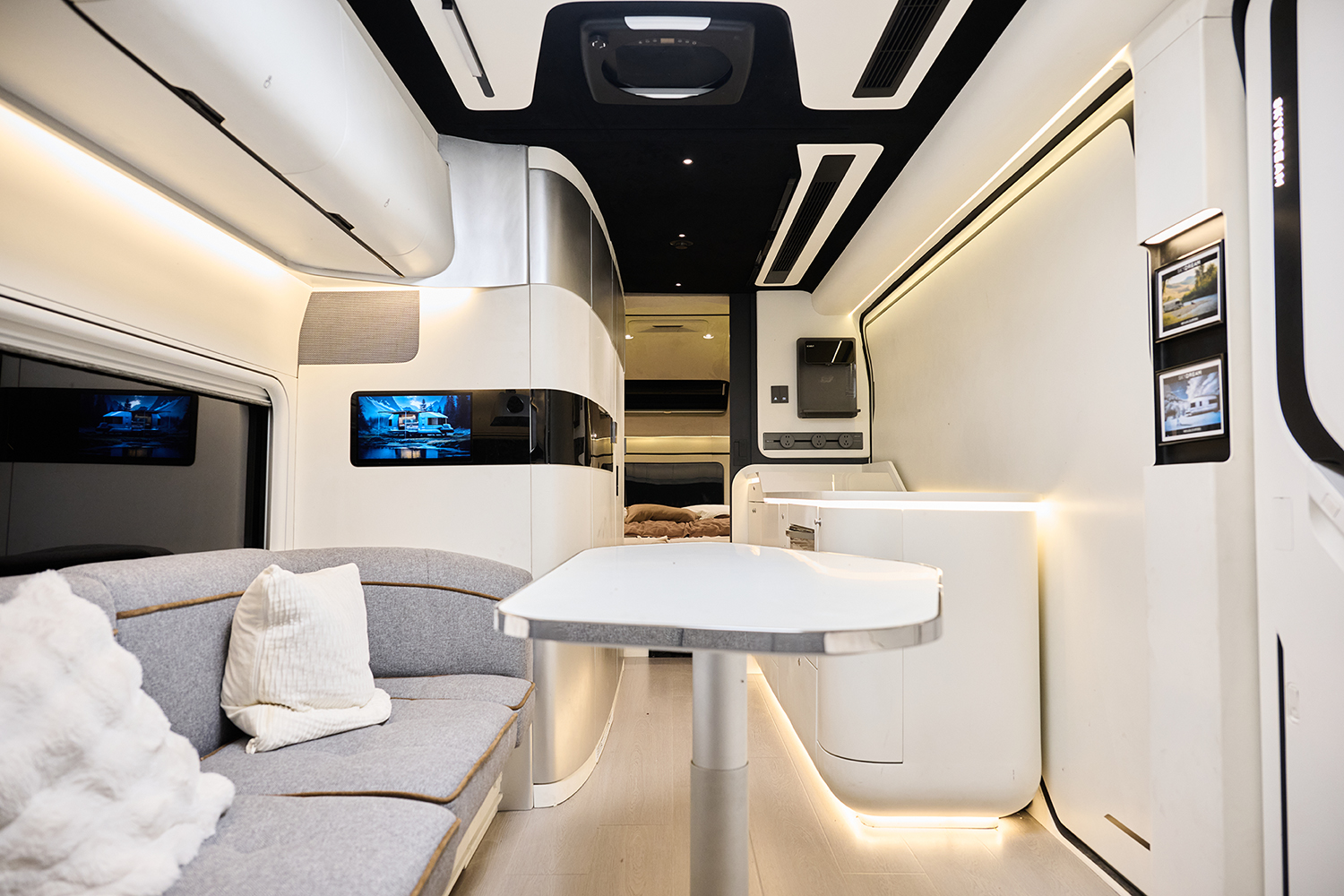
Caravans and RVs are becoming a ‘smart home’ away from home
Smart caravans must adapt to regional travel preferences
Smart home caravans are not a one-size-fits-all solution. Every region has different regulations and consumer preferences. In Australia, for example, there is a higher demand for off-road travel than in markets like the US, which are accustomed to roomier trailers that can travel long distances on a motorway. To meet these demands, Skydream has developed a unique 'skateboard chassis', a modular-style chassis that can be adapted to different RV sizes and layouts.
The US is the most developed market for smart home caravans. However, Australia and New Zealand are high-potential growth markets. According to the Caravan Industry Association of Australia, Australians took 17.3 million caravan and camping trips in 2025, and the country has already seen strong uptake of residential solar power. This creates opportunities for companies that can combine advanced technology with local market understanding.
The opportunity is clear. The challenge is trust.
As exciting as these technologies are, adoption ultimately comes down to a challenge many technology companies are familiar with: trust. Consumers understand the value of smart systems. The question is whether they trust those systems in remote environments. For a vehicle that is being towed across bumpy roads, exposed to mud, gravel and water, reliability is a key concern. Demonstrations, local partnerships, and customer connectivity will be important for companies to show that this technology is dependable long-term and in remote environments. Fortunately, the EV industry has already helped educate consumers on the safety and benefits of digital, connected vehicles.
Technology finding a new home
One of the most interesting aspects of technology investing is tracking how innovations expand beyond the industries they were originally built for. This creates opportunity for industry newcomers to disrupt the market with smart functionality and upgrades. At Empyrean Sky Partners, we are watching this space closely. The companies that will matter are those that can build consumer trust at scale.