
What Are High-Speed Brushless Motors? Why They Matter for Robotics and Physical AI
07 Jul 2026
Actuators and digital brushless motors are among the core technologies in robotics and smart devices. Understanding what they are and how they work helps explain why they appear so frequently in discussions around robotics and Physical AI. For investors, advances in motor technology are more than incremental engineering improvements. They are enabling smaller, lighter and more capable intelligent machines across consumer electronics, industrial automation, drones and humanoid robotics.
Brushed and brushless motors.
Brushed and brushless describe two different ways of generating rotation inside an electric motor.
In a brushed motor, electrical current passes through carbon brushes that have physical contact with a rotating shaft. Brushed motors are commonly found in power drills, toy cars, and older household appliances. These motors are typically large, loud, and heavy. Energy is lost through friction and heat, reducing efficiency.
Brushless electric motors spin using magnets. There are no physical electrical contact between moving and stationary components. This means they have a longer lifespan and higher energy efficiency because there is very little friction. They are also quieter and can reach a very high RPM safely.
What are the benefits of a high-speed motor?
In simple terms, the higher the rotational speed (measured in revolutions per minute or RPM) of a motor, the more power it can produce relative to its size. More power gives better suction in a vacuum cleaner, more air flow in a hair dryer, and blenders that pulverise more efficiently. High-speed motors deliver strong outputs with a much smaller motor. This is why stick vacuums can be thinner, drones can be smaller, and cordless garden tools can be lighter.
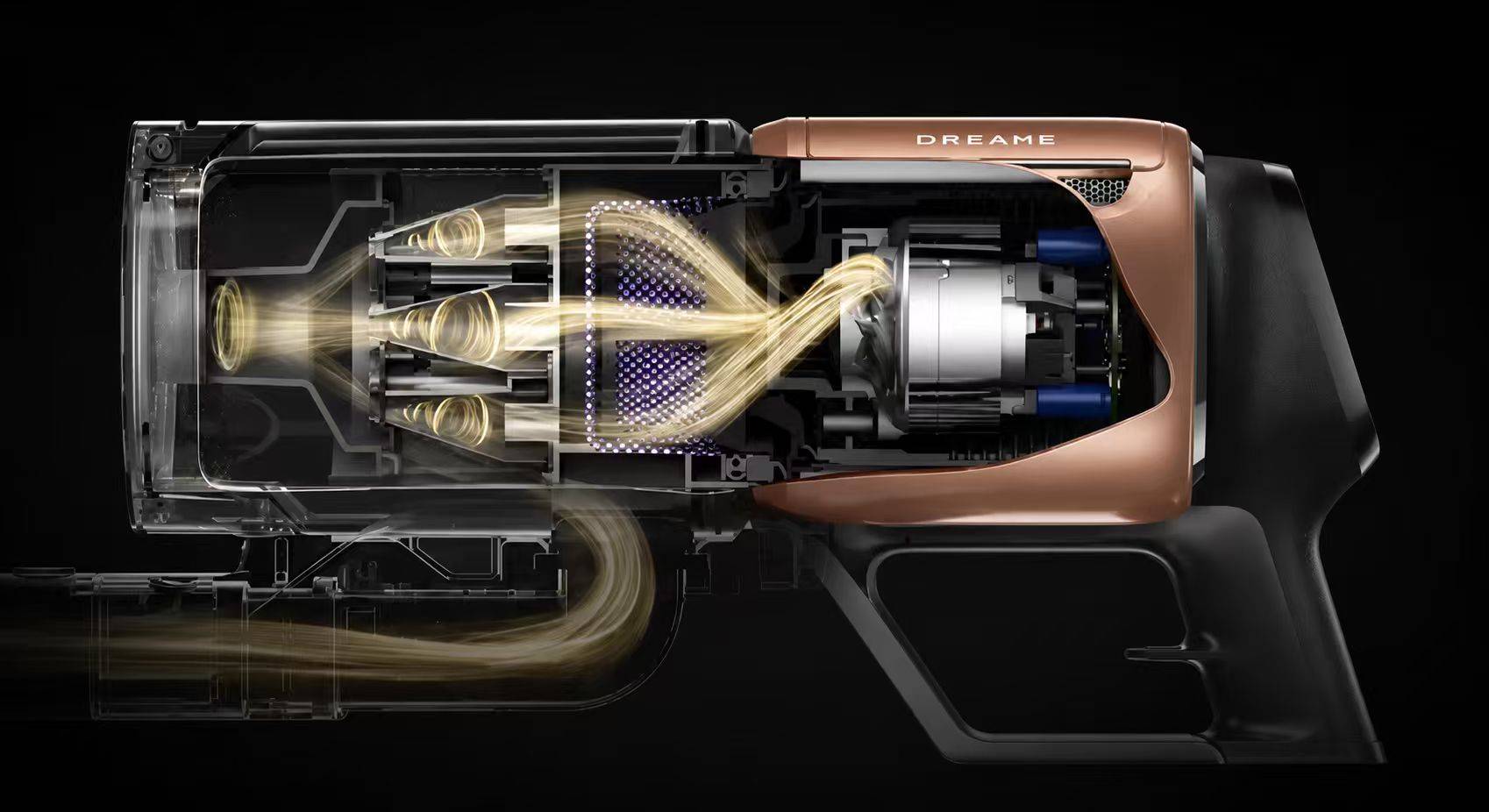
High speed motors in vacuum cleaners in vacuum cleaners create stronger suction with lighter devices. Image credit: Dreame Technology
Why are brushless motors important for AI and robotics?
Devices that once required larger brushed motors can now deliver similar or better performance from smaller, battery-powered brushless motors. The miniaturisation of technology is a trend we are watching closely across AI, robotics, and smart devices.
Electronic control allows the motor to respond to software commands. For example an algorithm can adjust the suction power of a vacuum cleaner based on a change in surface type, improving performance and energy efficiency. This makes high-speed (digital) motors an important component in intelligent robotics because this type of motor can be controlled by software.
What are actuators and why are they so important in robotics?
An actuator is any kind of device that converts energy into mechanical motion. A motor is a type of actuator. Actuators are an important part of humanoid robots. They function like muscles to support balance, absorb impact, and control force. Without compact high-speed digital motors, humanoids would typically be larger, heavier, and require a lot of energy to move. Actuators turn energy from a robot's battery into motion that moves a robot's joints. Many joint actuators use tiny, high-speed digital motors. The size and lightness of digital motors allow them to fit into robot limbs without making them too heavy.
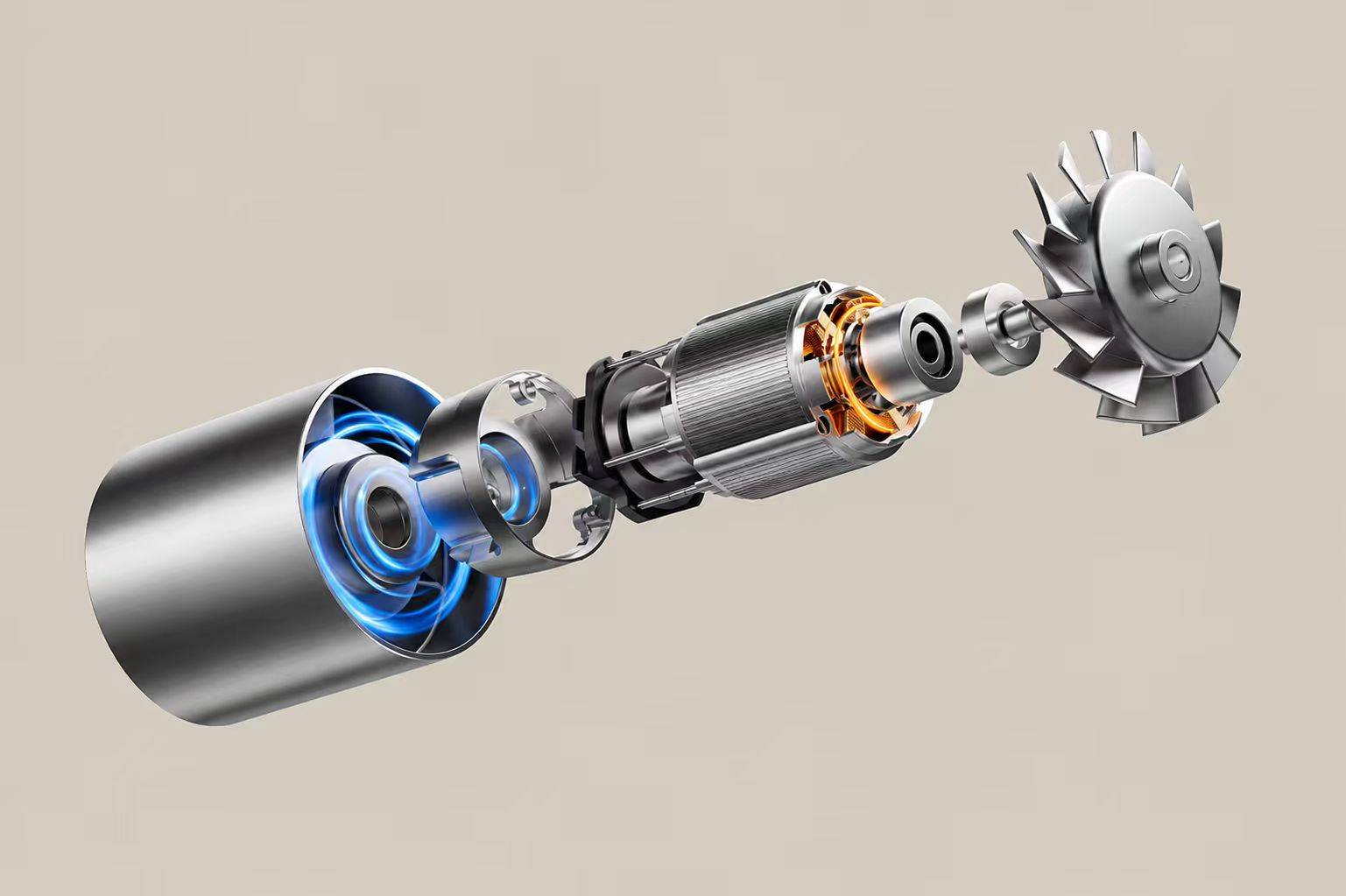
High speed motors are combined with thermal management technology, manufacturing precision, and software control to create defensible moats. Image credit: MOVA
Is a high-speed motor defensible technology?
The moat around a high-speed motor lies in the interconnected mechanical system. The motor is just one part. As rotational speed increases, centrifugal force and heat rises, increasing the risks of magnets failing, bearing wear, and thermal damage. Defensibility therefore comes from the combination of thermal management, manufacturing precision, power electronics, software control, and actuator design. This is why many leading robotics companies place so much focus on building their own actuator and motor technology. We've previously explored how companies within an industrial ecosystem can benefit from shared underlying technologies and manufacturing capabilities.
As AI increasingly moves into the physical world, the importance of motor technology continues to grow. Every robot, autonomous machine, and intelligent appliance ultimately needs to convert software decisions into physical movement. High-speed brushless motors and compact actuators provide that link, making them one of the enabling technologies behind Physical AI.